Somers Gallery
London
August 2 2025


To bring back the spirits of the seeds
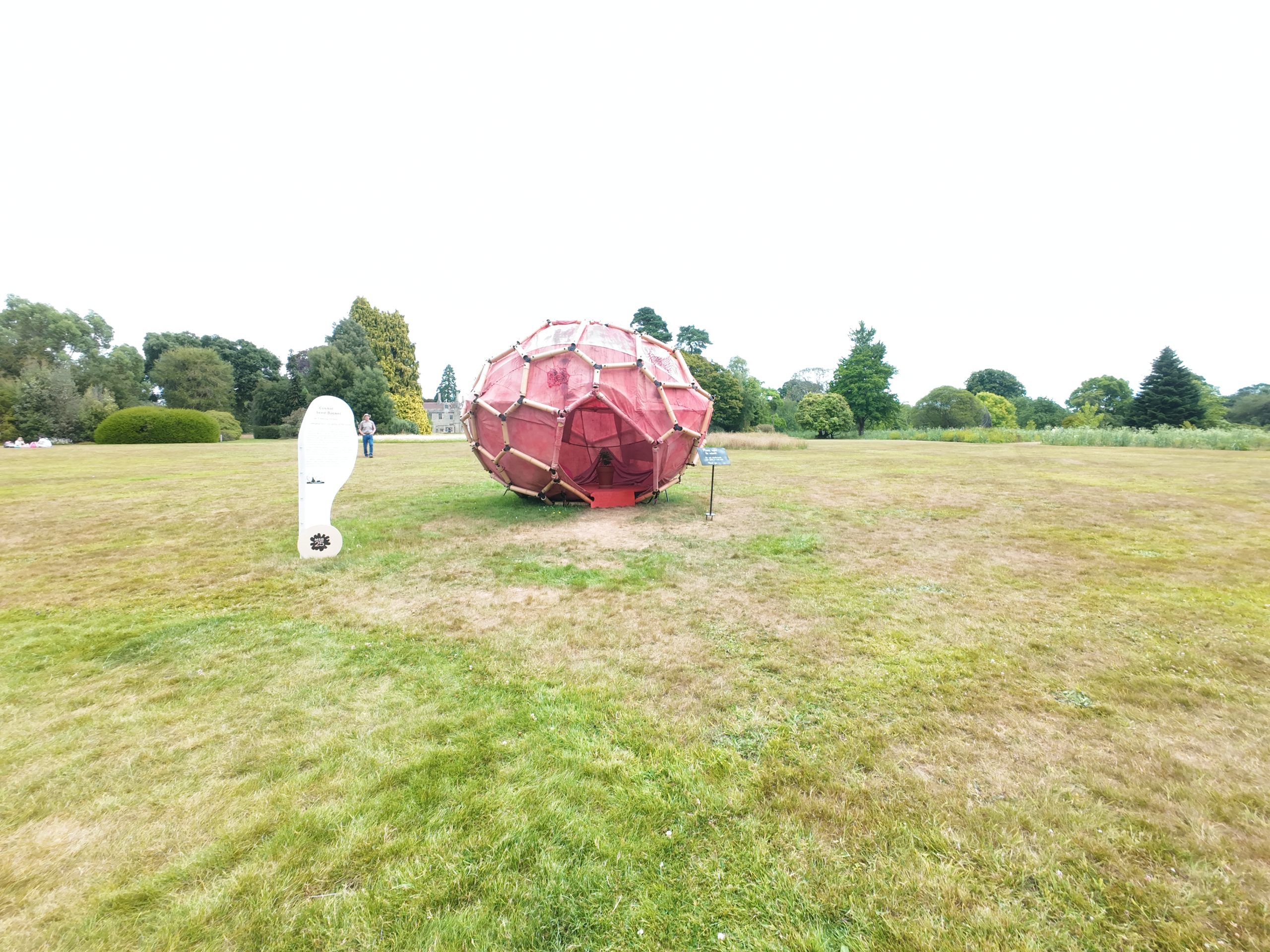
The Cosmic Seed Basket is a speculative vessel. In the shape of the seed of Colorín, of Tzité, of Erythrina americana it is currently nesting in Kew’s Garden in Wakehurst. A vessel across time and space, traversing a triangle across Mexico, Colombia and England. It was sent to rebuild relations where connections were lost, to reimagine reciprocal ways of being and knowing. This rebalancing of ecological relations, deeply informed by Indigenous knowledge, is also political. The Cosmic Seed Basket brings together many conversations with elders, healers and plant scientists, across geographies and cosmologies, guided by the seed and its inherent wisdom.
0
Seed as Spirit
To bring back the spirits of the seeds.
“That was the task ordered by the elders, the taitas up in the heavens and down in the Earth, as grandfather Berito Kuwaruwa told me when he consulted with them. They said this job has to be done, we need to bring back the spirit of the seeds. This seed is part of the law of origin.” (Cristina Ochoa)
1
Seed as Origin
Colorín. Tzité. Erythrina Americana. Names are part of this seed’s story. A bright orange, tiny cosmos. The origin of the world:
Colorín – Tzité for the Mayans, Tzompantle in Nahuatl – is deeply connected to the origin of humanity and time. According to the sacred Mayan book Popol Vuh, the first grandparents threw the seeds of Tzité alongside corn seeds to create humanity. In this cosmology, Mayans emerge as masters of time, time becomes malleable and traversable.
2
Seed as Oracle
Today Mayan Kʼicheʼ and Mexica peoples still read the future in the seeds of Colorín. Across her conversations, Cristina met Tata Cristóbal Cojti who reads the Colorín seed in Guatemala. It holds both the beginning of the world and what is to come. The knowledges of how to listen to the seeds is passed on from generation to generation. Yet, they can get lost if no one is left who remembers. Learning from elders in Tlapacoyan, in Veracruz, Mexico, Cristina met traditional healer Juana González who still works closely with Colorín, both as medicine and as oracle.
3
Seed as Medicine
If consumed, the seeds of Colorín are poisonous, yet the flowers are edible and delicious.
The seed’s toxicity is hypnotic, it is an anaesthetic and relieves pain, yet it is also psychoactive. In its sedating, paralysing ways the seed of Colorín puts time on hold. It is a time traveller in many ways, also into stillness and paralysis.
According to Mayan practices, medicine goes where medicine is needed. Healing seeps where healing is needed. Might the Cosmic Seed Basket have been called to Kew’s gardens in Wakehurst to sense a healing of the connection of plant science to the cultural knowledge of plants?
4
Seed as Record
As pointed out by the Ancestors that Berito Kuwaruwa spoke with, the seeds have been called here to rebuild connection, to restore and heal the spirit of those seeds, of the same kind, that are held in the Millennium Seed Bank, a few minute’s walk from the Cosmic Seed Basket.
These seeds are frozen in a different way, at -18C in cold storage chambers their metabolic lives are on hold. In glass jars, they rest inside the seed bank, the most biodiverse place on the planet, where jar after jar is working towards creating an archive of the genetic biodiversity of wild plants.
5
Seed as Collaborator
The teams at Kew’s Millennium Seed Bank, which holds many records of wild seeds globally, work directly with partners in countries of origin to deposit seeds. Through the Cosmic Seed Basket, Cristina has started a conversation with seed scientists Slyvia Bacci and Tiziana Ulian on a collaboration with Juana Gonzalez, the traditional healer in Veracruz, on future collections of Colorín into the seedbank. Juana harvests Colorín seeds only on specific dates with the right words and intentions, closely observing the tree over time. This potential future collaboration would be one way of exploring how Indigenous knowledge and cultural practices can guide global conservation projects such as the Millennium Seed Bank.
6
Seed as Portal
The Cosmic Seed Basket includes twenty woven nets and small hanging sculptures. These are made of Colorín seeds and string, creating spider-weblike organic patterns. These woven nets are at once trans-dimensional portals and amulets of protection.
7
Seed as Memory
In spring this year, Doña Juana and Cristina went to a specific Colorín tree in Veracruz to make an offering, to speak with the tree before collecting its seeds. Doña Juana shared that
‘The tree wants to be remembered, it’s dying or disappearing, it wants its seeds to be planted in a special place’. This is what Doña Juana wants for her community, too – to be remembered.
8
Seed as Kin
Through the stories of Doña Juana, kinship with seeds emerges as a link between generations where communities act as the guardians of seeds across the past, present and future. Across Cristina’s practice, and the many conversations and knowledge that are woven into the Cosmic Seed Basket, Colorín seeds also become connections across cultures and practices, across knowledge systems and relations to the living world.
9
Seed as Future Plant
A seed is a promise that hasn’t happened yet. Hinting at the future lifeworlds contained in each seed, a small Colorín tree sits inside the Cosmic Seed Basket’s soft fabric shape of Colorín. Throughout the exhibition, this small plant that was grown by Jo and her team in Kew’s nursery in Wakehurst, is a reflection of the promise of seeds. Gently swaying in the wind, it feels almost animated by the bio-sonification sounds that are playing inside the seed basket, a rhythm of future life, of awaiting germination. After the exhibition, it will be planted in Wakehurst, continuing the story, song and call of the Colorín seed. A reminder of this journey and what it might mean to return the spirit of the seeds.
10
Seed as Voice
Inside the Cosmic Seed Basket, you can hear the voice of Doña Juana, describing her relation to the Colorín seed, its medicinal power and a tree that is very close to her heart. Yet there’s also another voice present. Almost bird-like the twitching sounds of a Colorín seed itself can be heard. Cristina asked Doña Juana for permission if the sound of the seed could be recorded and listened to. Recorded with sound engineer Eduardo Benitez through an electrode, the sound reflects the electric impulses and frequencies inside the side, asking what it might mean to imagine this as a voice, a voice of origins and future paths.
A few hundred metres from the Cosmic Seed Basket, in Wakehurst’s forested garden, deep underground, are the remains of a WW2 listening station. Extending the imagination of what it might mean to broadcast (literally, to scatter seeds) the voice of the Colorín seed, this abandoned listening station offers an invitation to imagine who else might be listening to the seed’s song.
11
Seed as Traveller
Through the work Kew is doing on seed longevity and viability, another offshoot has emerged from the Cosmic Seed Basket. Colorín seeds might travel to the International Space Station. They’ll be on this journey as both carriers of cultural and natural knowledge, a powerful example of how separations between nature and culture are a construct of a very specific Eurocentric knowledge system. Who might eventually come across these seeds?
12
Seed as Ritual
Doña Juana works with the Colorín seed in a variety of ways, to treat evil eye, to support endeavours, to release darkness and depression.
On June 24th, hold two seeds together, hold them up to your ear, and you will hear them, ‘thank you’.
13
Seed as Future, Seed as Beginning
Dr. Marleen Boschen
Post-doctoral Fellow: Future Ecologies of Art
Interdisciplinary Research
Royal Botanic Gardens, Kew
The Cosmic Seed Basket is a speculative vessel. In the shape of the seed of Colorín, of Tzité, of Erythrina americana it is currently nesting in Kew’s Garden in Wakehurst. A vessel across time and space, traversing a triangle across Mexico, Colombia and England. It was sent to rebuild relations where connections were lost, to reimagine reciprocal ways of being and knowing. This rebalancing of ecological relations, deeply informed by Indigenous knowledge, is also political. The Cosmic Seed Basket brings together many conversations with elders, healers and plant scientists, across geographies and cosmologies, guided by the seed and its inherent wisdom.
0
Seed as Spirit
To bring back the spirits of the seeds.
“That was the task ordered by the elders, the taitas up in the heavens and down in the Earth, as grandfather Berito Kuwaruwa told me when he consulted with them. They said this job has to be done, we need to bring back the spirit of the seeds. This seed is part of the law of origin.” (Cristina Ochoa)
1
Seed as Origin
Colorín. Tzité. Erythrina Americana. Names are part of this seed’s story. A bright orange, tiny cosmos. The origin of the world:
Colorín – Tzité for the Mayans, Tzompantle in Nahuatl – is deeply connected to the origin of humanity and time. According to the sacred Mayan book Popol Vuh, the first grandparents threw the seeds of Tzité alongside corn seeds to create humanity. In this cosmology, Mayans emerge as masters of time, time becomes malleable and traversable.
2
Seed as Oracle
Today Mayan Kʼicheʼ and Mexica peoples still read the future in the seeds of Colorín. Across her conversations, Cristina met Tata Cristóbal Cojti who reads the Colorín seed in Guatemala. It holds both the beginning of the world and what is to come. The knowledges of how to listen to the seeds is passed on from generation to generation. Yet, they can get lost if no one is left who remembers. Learning from elders in Tlapacoyan, in Veracruz, Mexico, Cristina met traditional healer Juana González who still works closely with Colorín, both as medicine and as oracle.
3
Seed as Medicine
If consumed, the seeds of Colorín are poisonous, yet the flowers are edible and delicious.
The seed’s toxicity is hypnotic, it is an anaesthetic and relieves pain, yet it is also psychoactive. In its sedating, paralysing ways the seed of Colorín puts time on hold. It is a time traveller in many ways, also into stillness and paralysis.
According to Mayan practices, medicine goes where medicine is needed. Healing seeps where healing is needed. Might the Cosmic Seed Basket have been called to Kew’s gardens in Wakehurst to sense a healing of the connection of plant science to the cultural knowledge of plants?
4
Seed as Record
As pointed out by the Ancestors that Berito Kuwaruwa spoke with, the seeds have been called here to rebuild connection, to restore and heal the spirit of those seeds, of the same kind, that are held in the Millennium Seed Bank, a few minute’s walk from the Cosmic Seed Basket.
These seeds are frozen in a different way, at -18C in cold storage chambers their metabolic lives are on hold. In glass jars, they rest inside the seed bank, the most biodiverse place on the planet, where jar after jar is working towards creating an archive of the genetic biodiversity of wild plants.
5
Seed as Collaborator
The teams at Kew’s Millennium Seed Bank, which holds many records of wild seeds globally, work directly with partners in countries of origin to deposit seeds. Through the Cosmic Seed Basket, Cristina has started a conversation with seed scientists Slyvia Bacci and Tiziana Ulian on a collaboration with Juana Gonzalez, the traditional healer in Veracruz, on future collections of Colorín into the seedbank. Juana harvests Colorín seeds only on specific dates with the right words and intentions, closely observing the tree over time. This potential future collaboration would be one way of exploring how Indigenous knowledge and cultural practices can guide global conservation projects such as the Millennium Seed Bank.
6
Seed as Portal
The Cosmic Seed Basket includes twenty woven nets and small hanging sculptures. These are made of Colorín seeds and string, creating spider-weblike organic patterns. These woven nets are at once trans-dimensional portals and amulets of protection.
7
Seed as Memory
In spring this year, Doña Juana and Cristina went to a specific Colorín tree in Veracruz to make an offering, to speak with the tree before collecting its seeds. Doña Juana shared that
‘The tree wants to be remembered, it’s dying or disappearing, it wants its seeds to be planted in a special place’. This is what Doña Juana wants for her community, too – to be remembered.
8
Seed as Kin
Through the stories of Doña Juana, kinship with seeds emerges as a link between generations where communities act as the guardians of seeds across the past, present and future. Across Cristina’s practice, and the many conversations and knowledge that are woven into the Cosmic Seed Basket, Colorín seeds also become connections across cultures and practices, across knowledge systems and relations to the living world.
9
Seed as Future Plant
A seed is a promise that hasn’t happened yet. Hinting at the future lifeworlds contained in each seed, a small Colorín tree sits inside the Cosmic Seed Basket’s soft fabric shape of Colorín. Throughout the exhibition, this small plant that was grown by Jo and her team in Kew’s nursery in Wakehurst, is a reflection of the promise of seeds. Gently swaying in the wind, it feels almost animated by the bio-sonification sounds that are playing inside the seed basket, a rhythm of future life, of awaiting germination. After the exhibition, it will be planted in Wakehurst, continuing the story, song and call of the Colorín seed. A reminder of this journey and what it might mean to return the spirit of the seeds.
10
Seed as Voice
Inside the Cosmic Seed Basket, you can hear the voice of Doña Juana, describing her relation to the Colorín seed, its medicinal power and a tree that is very close to her heart. Yet there’s also another voice present. Almost bird-like the twitching sounds of a Colorín seed itself can be heard. Cristina asked Doña Juana for permission if the sound of the seed could be recorded and listened to. Recorded with sound engineer Eduardo Benitez through an electrode, the sound reflects the electric impulses and frequencies inside the side, asking what it might mean to imagine this as a voice, a voice of origins and future paths.
A few hundred metres from the Cosmic Seed Basket, in Wakehurst’s forested garden, deep underground, are the remains of a WW2 listening station. Extending the imagination of what it might mean to broadcast (literally, to scatter seeds) the voice of the Colorín seed, this abandoned listening station offers an invitation to imagine who else might be listening to the seed’s song.
11
Seed as Traveller
Through the work Kew is doing on seed longevity and viability, another offshoot has emerged from the Cosmic Seed Basket. Colorín seeds might travel to the International Space Station. They’ll be on this journey as both carriers of cultural and natural knowledge, a powerful example of how separations between nature and culture are a construct of a very specific Eurocentric knowledge system. Who might eventually come across these seeds?
12
Seed as Ritual
Doña Juana works with the Colorín seed in a variety of ways, to treat evil eye, to support endeavours, to release darkness and depression.
On June 24th, hold two seeds together, hold them up to your ear, and you will hear them, ‘thank you’.
13
Seed as Future, Seed as Beginning
Dr. Marleen Boschen
Post-doctoral Fellow: Future Ecologies of Art
Interdisciplinary Research
Royal Botanic Gardens, Kew